.svg)

How to choose a crypto exchange: security, fees and a beginner's checklist
Learn how to choose a safe crypto exchange. Compare security features, fees, and risks with a simple checklist for beginner cryptocurrency investors.
.png)
Choosing the right cryptocurrency exchange is one of the most important first steps when entering the digital asset market. With dozens of platforms available, each offering different features, security standards, and fee structures, it is easy for new investors to feel overwhelmed.
Many beginners struggle to identify what really matters when selecting an exchange. As a result, they often choose platforms based on popularity, advertising, or hype rather than safety and reliability. This can lead to unnecessary risks or higher costs over time.
The good news is that choosing a crypto exchange does not have to be complicated. With the right checklist, you can evaluate platforms logically and build a secure foundation for your crypto journey.
In this guide, you will learn how to evaluate exchanges based on security, usability, and costs. We will also explain how exchanges differ from banks, why fees matter more than many investors realize, and what risks exist when storing assets on exchanges.
By the end of this article, you will know how to choose a safe exchange and take your first steps into crypto investing with confidence.
Table of Contents
- What is the best way to choose exchange platforms?
- Why should new investors avoid complex trading apps?
- How does a crypto exchange differ from a bank?
- What security features are essential for beginners?
- How do transaction fees impact your investment?
- What are the risks of holding coins on an exchange?
- Which factors help you choose exchange sites safely?
- How do you connect your bank account to start?
- What is the benefit of recurring crypto buys?
- How do I track my portfolio performance easily?
- Conclusion

What is the best way to choose crypto exchange platforms?
Choosing the right cryptocurrency exchange begins with three priorities: security, simplicity, and reliability.
A trustworthy exchange protects your assets from cyber threats and ensures that your funds remain accessible when you need them. At the same time, the platform should be easy to use. Beginners benefit greatly from a clear interface that simplifies buying, selling, and managing digital assets.
Another important factor is the range of supported cryptocurrencies. Established exchanges typically offer well-known assets such as Bitcoin and Ethereum, while also providing access to other major coins.
Before opening an account, it is also wise to review the exchange’s reputation and regulatory status. Platforms operating under established regulations generally offer stronger compliance procedures and customer protection.
For example, many European investors rely on regulated exchanges that comply with financial supervision frameworks described by the European Securities and Markets Authority.
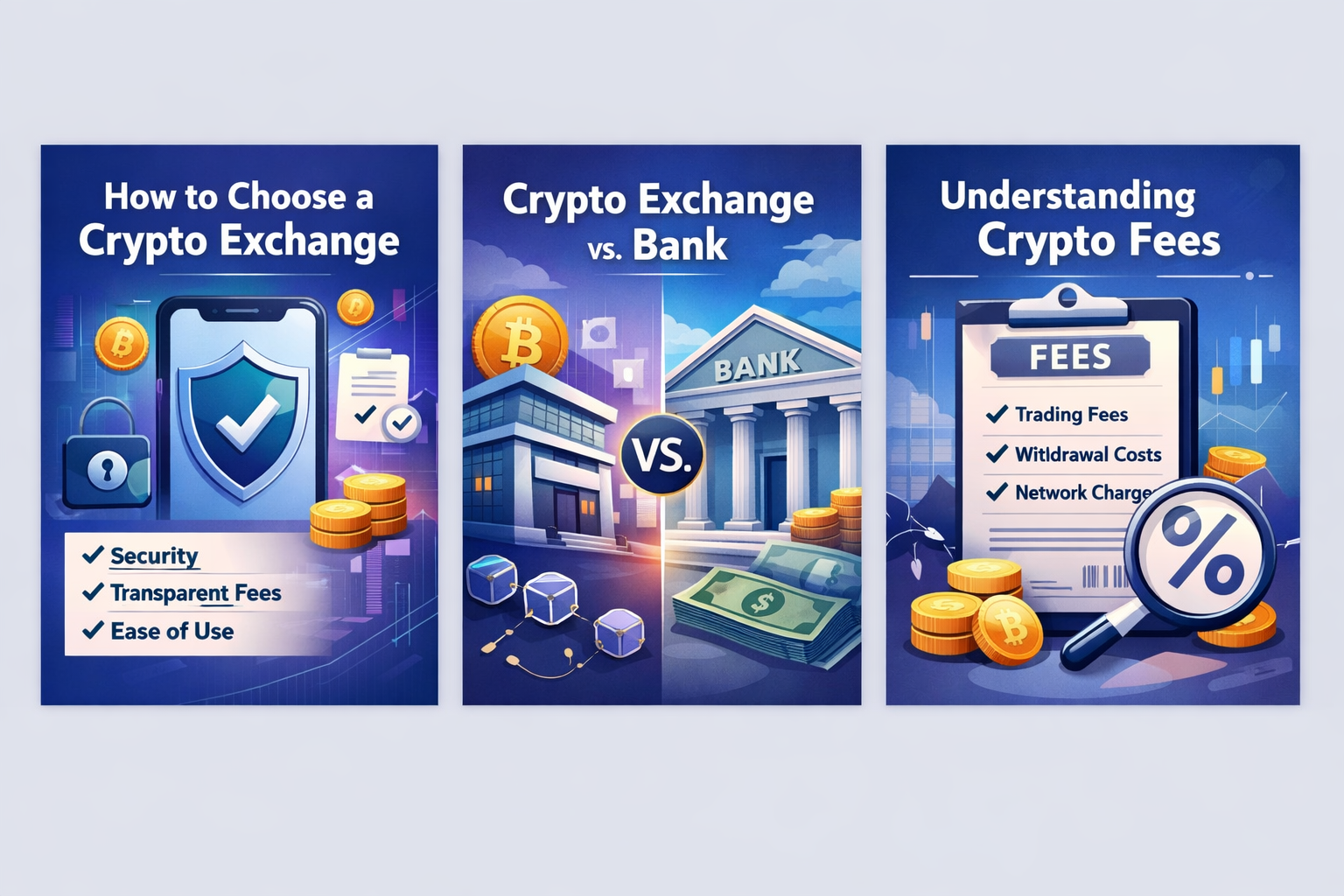
The 3 core criteria for beginners
Once you have identified exchanges that appear secure and reputable, it is important to examine three practical criteria.
1. Transparent fee structure
Crypto exchanges charge fees for trading, withdrawals, and sometimes deposits. These costs vary widely between platforms. Some exchanges advertise low trading fees but compensate with expensive withdrawal costs.
Understanding the full fee structure is essential before making your first purchase.
2. Reliable customer support
Customer support is often overlooked until something goes wrong. Beginners should prioritize exchanges that offer fast and accessible support through live chat or email.
3. Educational resources
The best exchanges provide beginner guides and tutorials to help new users understand crypto markets. These resources can significantly shorten the learning curve.
For broader educational material about digital assets, the CoinDesk learning portal is a widely used industry resource.
Why should new investors avoid complex trading apps?
Many cryptocurrency platforms are designed for experienced traders rather than beginners. They often display advanced charts, trading indicators, derivatives markets, and multiple order types.
While these tools are useful for professional traders, they can overwhelm newcomers.
For example, beginner investors frequently struggle to understand the difference between market orders and limit orders, or how stop-loss orders work. Mistakes in these settings can lead to unintended trades or losses.
Instead of focusing on complicated trading features, beginners benefit from a long-term investing approach. Simpler platforms allow investors to concentrate on building a diversified portfolio rather than reacting emotionally to price movements.
This philosophy is central to the approach used by Diamond Pigs: investing with structure rather than trading based on short-term noise.
How does a crypto exchange differ from a bank?
Although both banks and crypto exchanges handle financial transactions, they operate very differently.
Traditional banks manage fiat currencies, which are government-issued currencies such as euros or dollars. Banks operate under strict regulatory frameworks and offer services like savings accounts, loans, and payment systems.
Deposits are often protected by government insurance schemes.
For example, in Europe many deposits are protected under the European Deposit Insurance Scheme, which provides a level of protection for bank customers.
Crypto exchanges operate differently.
Instead of fiat currencies, exchanges allow users to trade digital assets that run on blockchain technology. The most well-known example is Bitcoin, which runs on a decentralized network rather than a central authority.
Because exchanges are not traditional banks, investor protections may differ depending on the platform and jurisdiction.
What security features are essential for beginners?
Security should be the first priority when selecting a cryptocurrency exchange.
A reliable exchange should provide several core protections:
Two-factor authentication (2FA)
Two-factor authentication adds an additional security layer beyond your password. Most exchanges support authentication apps such as Google Authenticator.
Cold storage
Secure exchanges store the majority of user funds in cold wallets, which remain offline and therefore protected from online hacking attempts.
Encryption and monitoring
High-quality platforms use advanced encryption protocols and monitor suspicious activity to protect user accounts.
Independent security audits are also a strong indicator that an exchange takes security seriously.
For more best practices on securing crypto assets, the Cybersecurity and Infrastructure Security Agency publishes guidelines on digital asset safety.
How do transaction fees impact your investment?
Transaction fees may seem small at first, but they can significantly reduce investment returns over time.
Exchanges typically charge several types of fees:
- Trading fees
- Withdrawal fees
- Network fees
Even a fee difference of 0.5% per trade can accumulate over dozens of transactions.
For active traders, high fees can turn profitable strategies into losses. Long-term investors are less affected, but costs still matter.
Comparing fee structures before choosing a platform can therefore improve long-term portfolio performance.
For example, market data providers such as CoinMarketCap allow investors to compare exchange fees and liquidity.
What are the risks of holding coins on an exchange?
Storing cryptocurrency on an exchange carries several risks that investors should understand.
The primary issue is custody. When coins are stored on an exchange, the platform controls the private keys that secure those assets.
This means users depend on the exchange’s security infrastructure.
If the exchange suffers a security breach, operational failure, or regulatory shutdown, user funds may be affected.
A well-known example occurred during the FTX Collapse, which demonstrated the risks of centralized custodial platforms.
Because of these risks, many investors eventually move their assets to private wallets where they control the keys.
Which factors help you choose exchange sites safely?
A safe crypto exchange typically demonstrates several key characteristics:
Regulatory compliance
Platforms operating within regulated jurisdictions generally follow stricter operational standards.
Strong security architecture
Look for exchanges with cold storage, multi-factor authentication, and independent security audits.
Liquidity
High liquidity ensures that investors can buy or sell assets quickly without large price differences.
Reputation
Long-standing exchanges with strong reputations are usually safer choices than newly launched platforms.
Reliable industry research can be found through organizations such as the Blockchain Research Institute, which evaluates exchange activity and market integrity.
How do you connect your bank account to start?
Funding a crypto exchange account typically involves linking your bank account.
Most exchanges offer several payment methods:
- Bank transfers (SEPA or ACH)
- Debit or credit card purchases
- Third-party payment providers
During the onboarding process, exchanges require identity verification under Know Your Customer (KYC) regulations.
These procedures are designed to prevent fraud and financial crime, which is why identity checks are standard across most reputable platforms.
Always confirm deposit fees and processing times before transferring funds.
What is the benefit of recurring crypto buys?
Many long-term investors prefer using a strategy called Dollar-Cost Averaging (DCA).
Instead of investing a large amount at once, investors allocate smaller amounts at regular intervals. This reduces the impact of market volatility and eliminates the pressure of trying to time the market.
For example, buying Bitcoin every month regardless of price spreads the purchase cost across different market conditions.
Over time, this approach can create a more stable average entry price.
How do I track my portfolio performance easily?
Monitoring portfolio performance helps investors stay informed without constantly watching the market.
Portfolio tracking tools consolidate data across exchanges and wallets, providing a clear overview of asset allocation, total value, and performance trends.
Many investors use dedicated tracking platforms that automatically synchronize with exchange accounts.
Examples include CoinStats and Delta Investment Tracker, which allow users to track investments in real time.
These tools provide dashboards, performance charts, and historical data that help investors maintain an organized investment strategy.
Conclusion
Entering the cryptocurrency market begins with choosing the right exchange. By prioritizing security, transparency, and simplicity, investors can significantly reduce unnecessary risks during the early stages of their crypto journey.
Throughout this guide, you learned how to evaluate exchanges based on security features such as two-factor authentication and cold storage, how to understand fee structures, and why exchanges operate differently from traditional banks.
Most importantly, successful crypto investing does not depend on complex trading tools or constant market monitoring. Instead, it relies on structured decision-making, disciplined strategies, and long-term thinking.
For many investors, the real challenge is not buying crypto but managing it consistently and calmly over time.
That is why structured investment strategies and automation tools are becoming increasingly popular: they remove emotional decision-making and allow investors to focus on long-term wealth building.
Frequently Asked Questions
What is the safest crypto exchange for beginners?
The safest crypto exchanges typically combine strong security measures, regulatory compliance, and transparent operations. Well-known examples include Kraken, Coinbase, and Bitvavo. Always verify that the platform supports two-factor authentication and cold storage for user funds.
Should beginners store crypto on exchanges?
Beginners often start by storing assets on exchanges because it is convenient. However, long-term investors sometimes move funds to private wallets to maintain control of their private keys.
Hardware wallets such as Ledger or Trezor allow users to store crypto offline, which reduces exposure to exchange hacks.
How much do crypto exchanges charge?
Crypto exchange fees typically range between 0.1% and 1.5% per trade, depending on the platform and trading volume. Additional costs may include withdrawal fees and network fees for transferring assets on blockchain networks.
Can I connect my bank account to a crypto exchange?
Yes. Most regulated exchanges allow users to connect bank accounts using methods such as SEPA transfers or debit card payments. Identity verification (KYC) is usually required before deposits are allowed.
Related Posts

The psychology of DCA: why consistency beats timing

Investing during a crypto bear market: Staying calm

XRP uitgelegd: hoe het werkt in lange termijn crypto

Never miss another article
Sign up to our email list to receive monthly newsletter.