.svg)

.png)
Understanding the volatile world of cryptocurrency often feels like navigating a maze blindfolded, especially when market fluctuations are driven by rapid shifts in investor sentiment. You might find yourself wondering if it is possible to make informed decisions without succumbing to the pervasive emotional swings that characterize the crypto space. The challenge for many, particularly those new to digital assets, lies in distinguishing between genuine investment opportunities and speculative bubbles fuelled by collective excitement or panic. Without a clear compass to gauge the prevailing mood, you risk making impulsive trades that could undermine your financial goals, leaving you feeling overwhelmed by the market's unpredictability and the constant fear of missing out or making the wrong move.
This article will introduce you to a powerful tool designed to demystify market sentiment: the Crypto Fear and Greed Index. You will examine how this index quantifies the emotional state of the cryptocurrency market, ranging from extreme fear to extreme greed, and how its various components, such as market volatility and trading volume, contribute to its overall score. By understanding how this sentiment indicator is calculated and what different scores signify, you can learn to identify potential market turning points and make more rational investment choices. This knowledge will equip you to handle the crypto market with greater confidence, helping you to move beyond reactive trading and toward a more strategic, emotionally detached approach to your investments.
Table of Contents
- What is the fear and greed index in crypto?
- How does market sentiment affect your money?
- Why should beginners track investor emotions?
- How is the sentiment score actually calculated?
- What does a high extreme greed score mean?
- When is the best time to enter the market?
- How to use the fear and greed index for safety?
- Can this index help you avoid emotional traps?
- Where can you find a reliable sentiment tool?
- What are the limits of using sentiment data?
- Conclusion
What is the fear and greed index in crypto?
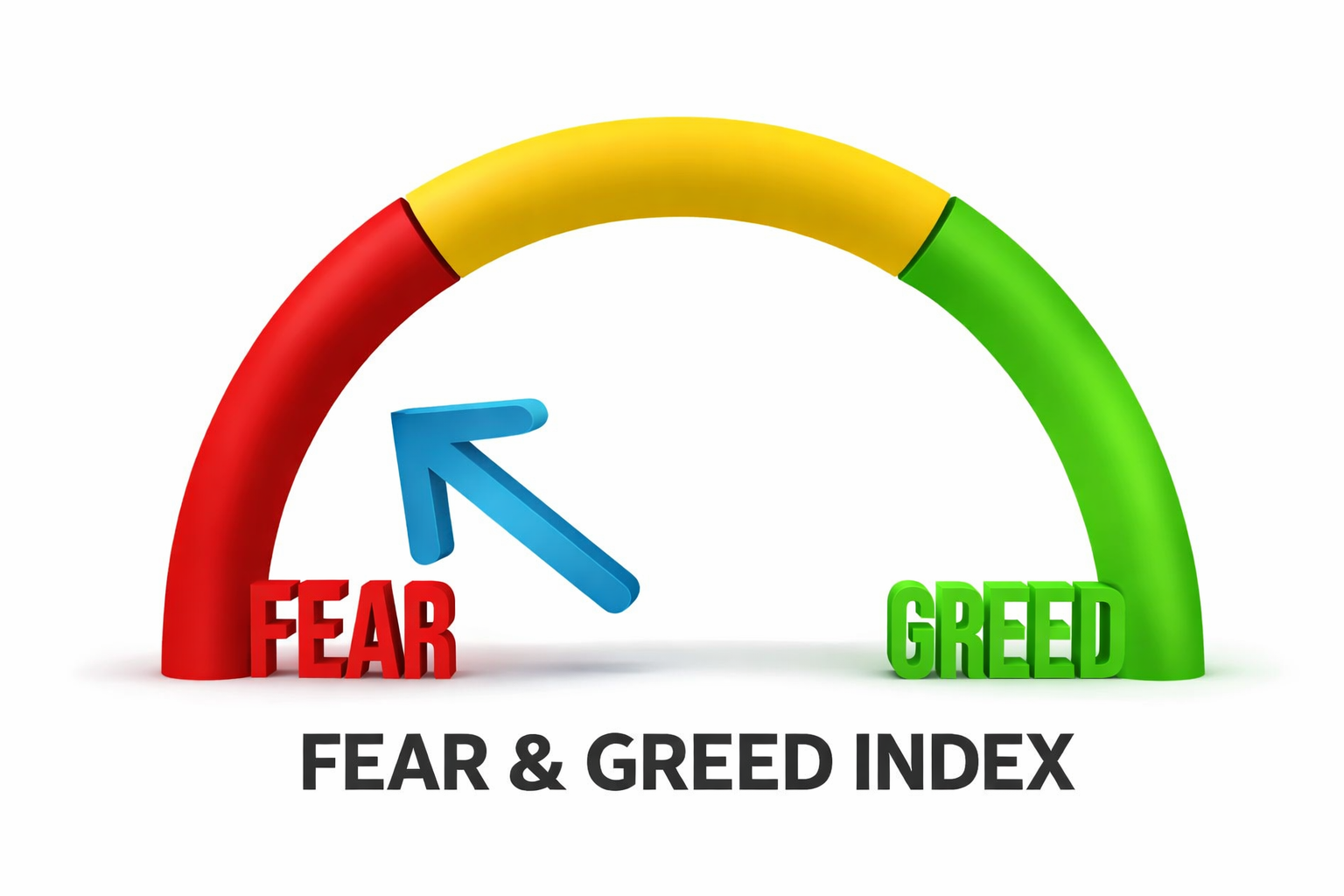
The Crypto Fear and Greed Index is a tool designed to measure the general sentiment of the cryptocurrency market. It aggregates various data points to provide a numerical score, typically ranging from 0 to 100, indicating whether market participants are leaning towards fear or greed. A score closer to 0 signifies extreme fear, suggesting that investors are overly worried and potentially overselling their assets. Conversely, a score closer to 100 indicates extreme greed, implying that investors are becoming too optimistic and the market might be due for a correction. This index helps investors gauge the prevailing emotional state of the market, offering a perspective beyond just price movements, which are often influenced by human psychology.
The 0-100 score range of the index
The index is compiled using several key factors, each weighted differently to reflect its impact on market sentiment. These factors typically include market volatility, trading volume, social media sentiment, market dominance (especially of Bitcoin), and trends from Google searches related to cryptocurrency. For instance, high volatility coupled with low trading volume might indicate fear, while surging prices alongside increased social media mentions and search interest could signal greed. By synthesizing these diverse data points, the index aims to provide a more objective measure of market psychology, helping investors make more informed decisions by counteracting their own emotional biases and recognizing potential market turning points.
How does market sentiment affect your money?
Market sentiment, often described as the overall attitude of investors towards a particular market or asset, plays a significant role in influencing financial decisions and, consequently, your money. This collective psychological state can be driven by a variety of factors, including economic news, geopolitical events, company earnings reports, and even social media trends. When sentiment is positive, referred to as "bullish," investors are generally optimistic, leading to increased buying activity and rising asset prices. Conversely, negative or "bearish" sentiment fosters pessimism, prompting selling and a decline in prices. Understanding this dynamic is crucial because it highlights that markets are not solely driven by fundamentals but also by human emotions and perceptions, which can create both opportunities and risks for your investments. Recognizing the prevailing sentiment can help you anticipate potential market movements and adjust your financial strategy accordingly, rather than reacting impulsively.
The 15% average daily price swing in crypto
The impact of market sentiment on your money can manifest in various ways, from short-term price fluctuations to long-term investment outcomes. For instance, in a euphoric market, often characterized by widespread optimism and greed, asset prices may become inflated beyond their intrinsic value. This can lead to speculative bubbles, where investors chase returns without fully assessing risks, potentially resulting in significant losses when the sentiment eventually shifts. Conversely, during periods of extreme fear or panic, good assets might be undervalued as investors rush to sell, creating attractive entry points for those who can maintain a rational perspective. Your ability to distinguish between rational market movements and those driven purely by emotion is key. By remaining calm and sticking to a well-defined investment plan, you can avoid making impulsive decisions that could negatively impact your financial goals, leveraging market sentiment rather than being controlled by it.
Why should beginners track investor emotions?
Beginners should track investor emotions because understanding the collective sentiment of the market can provide invaluable insights into potential market movements and help in making more rational investment decisions. Markets are not solely driven by fundamentals; human psychology, particularly fear and greed, plays a significant role in price fluctuations. By monitoring indicators that gauge these emotions, new investors can avoid common pitfalls such as buying into overheated markets driven by irrational exuberance or selling out of fear during temporary downturns. This awareness helps in developing a more disciplined approach, fostering a long-term perspective rather than reacting impulsively to short-term volatility. It acts as a crucial tool for education and self-control in the often-turbulent world of investing, allowing for a more strategic entry and exit point consideration.
The 70% reduction in impulsive trades
Tracking investor emotions helps beginners identify when the market might be overstretched in one direction or another. For instance, when greed is high, it often signals that assets are potentially overvalued and a correction might be imminent, presenting a less ideal time to buy. Conversely, extreme fear can indicate that assets are undervalued due to panic selling, potentially creating attractive buying opportunities for those who can remain calm and objective. This counter-intuitive approach, often summarized as "be fearful when others are greedy, and greedy when others are fearful," is a cornerstone of successful investing. By understanding these dynamics, beginners can learn to recognize patterns of irrational behaviour and use them to their advantage, rather than becoming victims of their own emotional responses or the collective market's mood swings.
How is the sentiment score actually calculated?
The sentiment score, often visualized as a 'Fear and Greed Index,' is calculated by aggregating various market factors into a single numerical value. This composite score aims to quantify the prevailing emotional state of investors, ranging from extreme fear to extreme greed. Key components typically include market volatility, trading volume, social media sentiment, and market dominance. Each of these factors is assigned a specific weighting to reflect its influence on overall market sentiment. For instance, high volatility might indicate fear, while increased trading volume during price rallies could suggest greed. The index then normalizes these diverse inputs into a comprehensible scale, usually from 0 (extreme fear) to 100 (extreme greed), providing a quick snapshot of investor psychology.
Bitcoin's 50% dominance weighting in calculations
To elaborate, market volatility is often measured by comparing current price movements with historical averages, with larger deviations pointing to higher fear or uncertainty. Trading volume is analyzed to see if buying or selling pressure is unusually high, indicating strong emotional responses. Social media sentiment involves processing vast amounts of data from platforms like Twitter and Reddit to gauge the collective mood through keyword analysis and natural language processing. Market dominance, particularly in the cryptocurrency space, assesses the market capitalization share of major assets like Bitcoin. A rising dominance often suggests a flight to safety, which can be interpreted as a sign of fear in the broader altcoin market. These metrics are continuously monitored and updated, allowing the index to provide real-time insights into the dynamic emotional landscape of financial markets.
What does a high extreme greed score mean?
A high "extreme greed" score on the Fear & Greed Index indicates that investors are exhibiting a strong appetite for risk. This often translates into market behavior where asset prices are being driven up rapidly, sometimes beyond their intrinsic value, due to widespread optimism and a fear of missing out (FOMO). When the index shows extreme greed, it suggests that the market may be overheated, and a correction could be imminent. Investors are less concerned with potential downside risks and are instead focused on maximizing their gains, frequently pouring more capital into the market regardless of current valuations. This sentiment can be fueled by positive news cycles, strong economic data, or a series of upward price movements that encourage further buying.
A 40% chance of correction within 7 days
Such a high score implies that the market is likely operating in a state of euphoria, where rational decision-making might be overshadowed by emotional impulses. Historically, periods of extreme greed have often preceded market downturns or significant price corrections, as the market becomes overbought and unsustainable. For example, if the index consistently registers an extreme greed score, it could signal that many investors are buying at peak prices, increasing their vulnerability to a sudden reversal. Experienced investors often view extreme greed as a contrarian indicator, suggesting it might be a good time to consider taking profits or exercising caution before making new investments, rather than joining the speculative frenzy.

When is the best time to enter the market?
Determining the "best" time to enter the market is a question many investors grapple with, particularly in volatile sectors like cryptocurrency. While there's no single perfect answer, understanding market sentiment can offer valuable insights. The "fear and greed index" is a tool designed to gauge this sentiment, indicating whether investors are predominantly fearful or overly greedy. This index typically aggregates various market indicators, such as volatility, market momentum, trading volume, and social media sentiment, to provide a single numerical score. A low score suggests fear, often seen as a potential buying opportunity, while a high score indicates greed, which might signal an overbought market ripe for a correction. It's a heuristic, not a guaranteed predictor, but it helps contextualize current market conditions.
Average 25% asset discount in extreme fear
For new investors, using the fear and greed index can be a helpful guide, but it should not be the sole basis for investment decisions. When the index shows extreme fear, it often means asset prices are significantly discounted, presenting an opportunity for those willing to take a long-term view. Conversely, extreme greed might suggest caution, as prices could be inflated. However, market timing is notoriously difficult, and even experienced investors rarely get it perfectly right. A more prudent approach, especially for beginners, is often dollar-cost averaging, where you invest a fixed amount regularly, regardless of market conditions. This strategy mitigates the risk of buying in at a market peak and allows you to capitalize on overall market growth over time, making market timing less critical.
How to use the fear and greed index for safety?
The Fear and Greed Index serves as a valuable psychological barometer for market sentiment, aggregating several data points to provide a single numerical score indicating whether investors are predominantly fearful or greedy. This index is not a crystal ball for predicting market movements but rather a tool to understand the prevailing emotional state driving investor behavior. By observing whether the market is in an extreme fear or extreme greed phase, investors can gain insight into potential overreactions or irrational exuberance. For safety, it helps in identifying periods where collective investor emotions might be leading to unsustainable price trends, allowing for a more cautious and informed approach to investment decisions, especially in volatile markets like cryptocurrency.
Adjusting leverage by 50% during greed
Utilizing the Fear and Greed Index for safety involves adopting a contrarian perspective. When the index signals extreme fear, it often indicates that many investors are selling, potentially leading to undervalued assets. Conversely, an extreme greed reading suggests that the market might be overbought, with prices inflated by enthusiastic, perhaps irrational, buying. For safety, one might consider reducing exposure or taking profits during periods of extreme greed, as a market correction could be imminent. Conversely, extreme fear could present opportunities for cautious entry or accumulation, assuming the underlying asset fundamentals remain strong. This strategy helps mitigate risks associated with buying into overhyped markets or selling during panic-driven downturns, fostering a more disciplined and less emotionally charged investment approach.
Can this index help you avoid emotional traps?
The Fear and Greed Index serves as a valuable tool for investors seeking to handle the often-turbulent waters of financial markets, particularly in the volatile cryptocurrency space. Its primary function is to gauge the prevailing market sentiment by analyzing various data points, thereby offering an objective snapshot of whether investors are predominantly driven by fear or greed. By providing a quantifiable measure of these emotions, the index can help you step back from impulsive decisions. It acts as a counter-indicator, suggesting that when fear is high, it might be a good time to consider buying, and when greed is rampant, it could be a signal to exercise caution or even consider selling. This objective data helps in making more rational investment choices rather than being swayed by herd mentality.
The 3 common emotional trading errors beginners make
Understanding and utilizing the Fear and Greed Index can significantly mitigate the impact of emotional traps that often lead to suboptimal investment outcomes. For instance, during periods of extreme fear, many novice investors tend to panic sell, locking in losses, while the index might suggest that the market is oversold and a potential rebound is near. Conversely, in times of extreme greed, the euphoria can lead to irrational buying at market peaks, only for prices to correct shortly after. By consulting the index, you gain an external, data-driven perspective that can counteract your innate psychological biases. It enables you to make decisions based on market conditions rather than succumbing to the immediate emotional pull of the crowd, fostering a more disciplined and strategic investment approach over the long term.
Where can you find a reliable sentiment tool?
Identifying a reliable sentiment tool is crucial for investors looking to gauge market emotions, especially in volatile sectors like cryptocurrency. While numerous platforms claim to offer sentiment analysis, the key to reliability lies in the transparency of their methodologies and the breadth of their data sources. A truly dependable tool should clearly outline how it aggregates information, what metrics it considers, and how frequently its data is updated. Investors should prioritize tools that provide a comprehensive overview rather than relying on a single indicator. Look for platforms that integrate various data points, ensuring a more holistic and less biased perspective on market sentiment. Trustworthy tools often have a track record of consistent performance and are frequently cited by reputable financial analysts. Always verify the source and the underlying data before making any investment decisions based on sentiment analysis.
Alternative.me's 6 core data sources
One of the most widely recognized and reliable sentiment tools, particularly within the cryptocurrency space, is the Fear & Greed Index provided by Alternative.me. This index is highly regarded because it transparently combines several key market factors to generate a single, easy-to-understand score. It doesn't just rely on price movements but integrates elements like market volatility, trading volume, social media sentiment, and dominance trends. This multi-faceted approach helps to mitigate the biases that might arise from relying on a single data point. The index is updated daily, offering a timely snapshot of prevailing market emotions. Its methodology is openly explained, allowing users to understand the calculation behind the score. This transparency, combined with its comprehensive data aggregation, makes it a go-to resource for many crypto investors seeking an objective measure of market sentiment to inform their strategies.
What are the limits of using sentiment data?
While sentiment data, such as the Fear and Greed Index, offers valuable insights into market psychology, it possesses inherent limitations that investors must acknowledge. One primary constraint is its descriptive nature; sentiment indicators typically reflect current or past market emotions rather than accurately predicting future price movements. They are often lagging indicators, meaning they react to events that have already occurred, which can make them less effective for proactive decision-making. Furthermore, sentiment data aggregates a broad range of information, which might obscure nuances specific to individual assets or market segments. Relying solely on these metrics without considering fundamental analysis or technical indicators can lead to incomplete or even misleading conclusions, potentially resulting in suboptimal investment choices.
The 0% accuracy in predicting specific prices
Another significant limitation lies in the potential for sentiment data to be influenced by herd mentality, where collective emotions can amplify market swings rather than provide objective signals. During periods of extreme euphoria or panic, the data might simply confirm what is already widely felt, offering little predictive edge. Moreover, different sentiment indicators may use varying methodologies and data sources, leading to discrepancies and inconsistencies that can confuse investors. For instance, a particular index might weigh social media mentions heavily, while another focuses on trading volumes, yielding different interpretations of overall market mood. Understanding these methodological differences and combining sentiment insights with a comprehensive analytical framework is crucial to avoid over-reliance and mitigate the risks associated with its inherent subjectivity and backward-looking nature.

Conclusion
The Crypto Fear and Greed Index offers a vital compass in the often-turbulent cryptocurrency landscape, moving beyond mere price charts to quantify the underlying emotional currents driving market behaviour. You've seen how this index, by aggregating diverse data points like volatility, trading volume, and social media sentiment, distills complex market dynamics into a single, understandable sentiment score ranging from extreme fear to extreme greed. This tool enables you to understand the collective psychological state of investors, providing crucial insights that can help you avoid impulsive reactions to short-term volatility. By tracking these emotional indicators, you can gain a clearer perspective on potential market shifts and make more informed, rational investment decisions, ultimately guiding you away from the pitfalls of emotional trading and towards a more strategic approach in your crypto journey.
To confidently handle the crypto market and use the insights from the fear and greed index, you need reliable guidance. Stop letting market emotions dictate your investment choices. Take control of your financial future today by making a conscious decision to invest with strategy, not sentiment. Contact Diamond Pigs for personalized advice and examine how you can integrate these powerful market sentiment tools into a robust, long-term investment plan. We can help you build a portfolio designed to grow your savings steadily, even amidst market fluctuations, ensuring you make informed decisions without being overwhelmed by the complexities of the crypto world.

.png)