.svg)

What is XRP? How it works and its role in a long-term crypto strategy
A clear explanation of XRP, its use in the crypto market, key risks, and how XRP fits into long-term, rule-based investment strategies at Diamond Pigs.
.png)
You have probably heard of XRP, but understanding what truly makes this cryptocurrency different is not always easy. While many digital assets are driven by speculation and emotional trading, XRP was created with a clear and functional goal: improving the efficiency of international payments.
In a market where volatility dominates headlines, it can be difficult to assess the real value of an asset like XRP. Investors often question whether it offers genuine long-term potential or whether uncertainty and regulation make it too risky. If you are looking for a more stable addition to a crypto portfolio, these doubts are understandable.
Rather than focusing purely on price movements, it is important to look at how XRP functions, where it is used, and how it fits into a long-term investment strategy. This article explores XRP’s role within the crypto market and explains how it can be approached calmly and strategically, without relying on speculation.
Table of Contents
When Does XRP Become Essential for Long-Term Holders?
Which Factors Make XRP Strategically Important Now?
What Risks Associated With XRP Should Investors Assess?
How Does XRP Fit Into a Balanced Crypto Allocation?
When Do We Expect Structural Changes for XRP?
What Can Investors Safely Overlook About XRP’s Volatility?
Which Scenarios Allow XRP to Outperform Other Assets?
What Trade-Offs Exist for Long-Term XRP Holders?
When Do Transaction Fees on XRP Impact Overall Returns?
Which Emerging Trends Could Affect XRP’s Future Relevance?
Conclusion
When Does XRP Become Essential for Long-Term Holders?
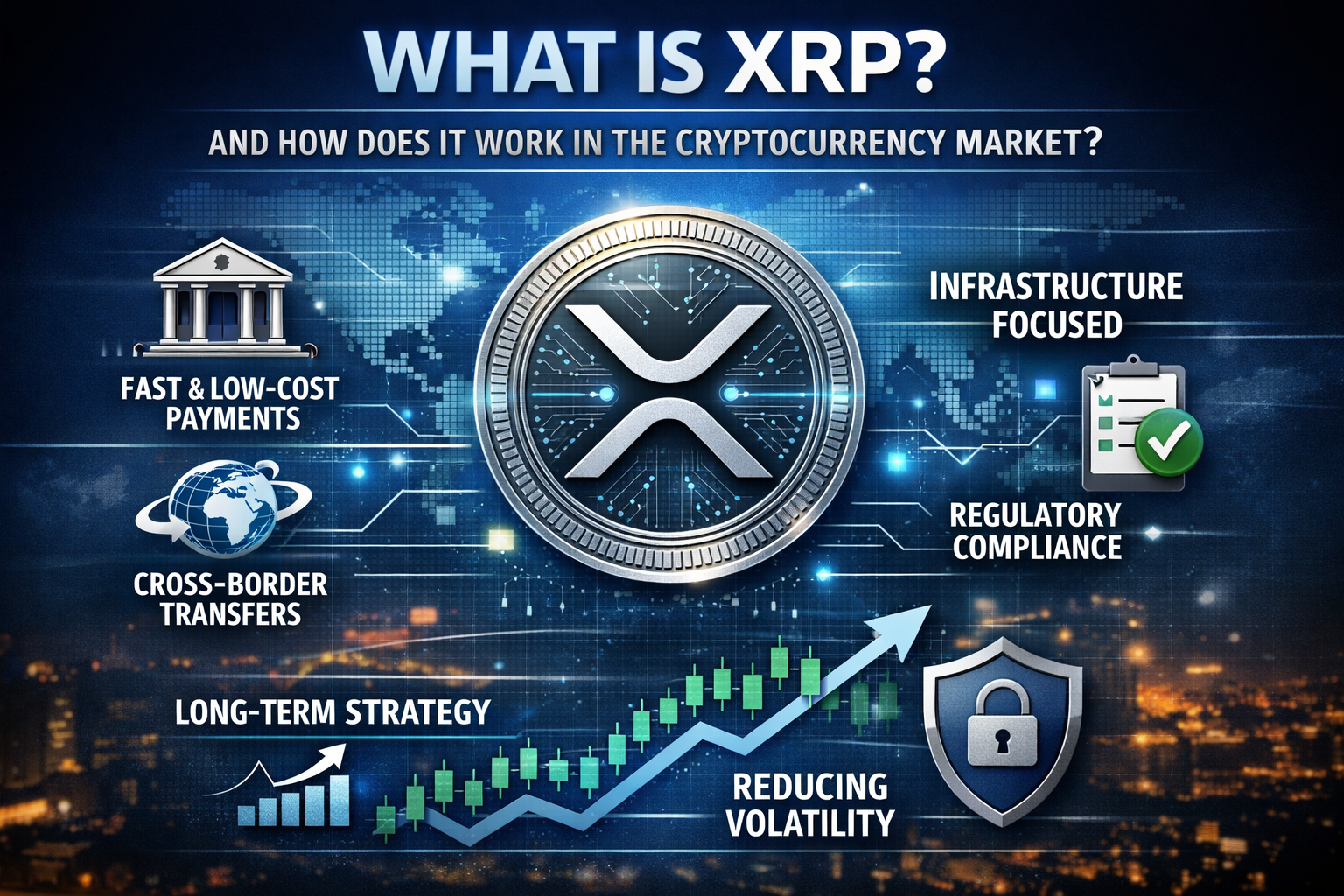
XRP becomes relevant for long-term holders when the focus shifts from short-term gains to structural value. Unlike many cryptocurrencies that rely on narratives and momentum, XRP is designed as a utility asset. Its primary use is facilitating fast and low-cost cross-border transactions through the XRP Ledger.
This functional role appeals to investors who prioritise predictability and real-world adoption. XRP has established relationships with payment providers and financial institutions, which strengthens its credibility compared to purely speculative tokens. These partnerships support its long-term relevance rather than its short-term price action.
For investors building portfolios with a multi-year horizon, XRP can contribute stability when used correctly. Its value lies not in constant outperformance, but in offering exposure to crypto infrastructure within a controlled risk profile.
Which Factors Make XRP Strategically Important Now?
XRP’s strategic importance today is closely tied to regulatory and institutional developments. As legal frameworks around cryptocurrencies continue to mature, assets with a clear use case become easier to assess and integrate into regulated environments.
Improved regulatory clarity has shifted market perception around XRP, especially among institutional participants. This has made it more attractive as a long-term asset rather than a speculative trade. At the same time, ongoing improvements to the XRP Ledger ensure that the network remains efficient, scalable, and relevant.
As traditional finance increasingly explores blockchain-based settlement, XRP’s role as a payment-focused asset places it in a unique position. This combination of regulation, technology, and adoption explains why XRP remains strategically relevant despite changing market cycles.
What Risks Associated With XRP Should Investors Assess?
Regulatory uncertainty remains one of the most important risks for XRP investors. Legal decisions and policy changes can directly affect adoption, accessibility, and market sentiment. These developments are often outside the control of individual investors, making risk management essential.
Market volatility is another factor. Although XRP is often less extreme than smaller altcoins, it still operates within a highly volatile asset class. Price swings can occur quickly, particularly during broader market stress.
Competition also plays a role. New payment solutions, alternative blockchains, and central bank digital currencies could influence XRP’s future relevance. Understanding these risks allows investors to approach XRP with realistic expectations and appropriate positioning.
How Does XRP Fit Into a Balanced Crypto Allocation?
Within a diversified crypto portfolio, XRP is often used as a stabilising component rather than a growth driver. Its liquidity, established market position, and functional use case make it suitable for investors seeking balance.
XRP can help reduce reliance on highly speculative assets, especially during uncertain market phases. When combined with other crypto exposures, it can contribute to a more controlled risk-return profile.
At Diamond Pigs, XRP is not treated as an isolated investment. Its role is evaluated within the broader portfolio structure, ensuring that exposure aligns with long-term goals rather than short-term sentiment.
When Do We Expect Structural Changes for XRP?
Structural changes for XRP are most likely to result from regulatory developments and technological evolution. As governments define clearer rules for digital assets, XRP’s legal standing will continue to shape its adoption and market position.
Technological improvements to the XRP Ledger also influence long-term structure. Enhancements in scalability, security, and interoperability can increase its appeal to institutions seeking efficient payment solutions.
These changes tend to unfold gradually. For long-term investors, the focus should be on direction rather than timing, recognising that structural shifts often take years rather than months.
What Can Investors Safely Overlook About XRP’s Volatility?
Short-term price fluctuations are a normal part of crypto markets and often reflect broader sentiment rather than changes in fundamentals. For XRP, these movements can appear dramatic but are usually temporary.
Long-term investors benefit from focusing on adoption trends, regulatory progress, and network usage instead of daily price action. By doing so, volatility becomes less disruptive and easier to manage.
Structured investment approaches, such as those used at Diamond Pigs, are designed to filter out this noise and reduce emotional reactions during periods of market stress.
Which Scenarios Allow XRP to Outperform Other Assets?
XRP tends to perform well in scenarios where regulatory uncertainty decreases and institutional adoption increases. Clear legal frameworks often encourage broader use of infrastructure-focused assets.
Market environments that favour utility over speculation can also support XRP’s relative performance. When investors shift attention away from hype-driven narratives, XRP’s functional role becomes more visible.
In these conditions, XRP’s efficiency, liquidity, and scalability can allow it to outperform assets that rely primarily on momentum or sentiment.

What Trade-Offs Exist for Long-Term XRP Holders?
Long-term XRP holders accept that the asset may not deliver rapid or explosive returns. Its focus on infrastructure means growth is often gradual and dependent on adoption rather than speculation.
At the same time, holders face regulatory uncertainty and market volatility. These trade-offs require patience and discipline, particularly during periods of limited price movement.
In return, investors gain exposure to a payment-focused asset with real-world relevance and a clearer link between usage and value. For many, this balance is preferable to high-risk speculation.
When Do Transaction Fees on XRP Impact Overall Returns?
XRP’s transaction fees are extremely low, making them largely irrelevant for long-term investors. Fees tend to matter only in high-frequency trading scenarios where costs accumulate over time.
For investors who follow long-term strategies and minimise unnecessary transactions, XRP’s fee structure supports efficient portfolio management without eroding returns.
This aligns with Diamond Pigs’ emphasis on strategic allocation rather than constant trading.
Which Emerging Trends Could Affect XRP’s Future Relevance?
Several trends may influence XRP’s future role within the crypto ecosystem. Increased blockchain adoption in traditional finance could strengthen demand for efficient payment solutions.
The development of central bank digital currencies may introduce competition but could also accelerate acceptance of digital settlement infrastructure. Regulatory harmonisation across regions may further clarify XRP’s position.
These trends highlight that XRP’s future relevance depends on structural adoption rather than short-term market cycles.
Conclusion
XRP offers a different proposition within the cryptocurrency market. It is not built for hype or speculation, but for function and efficiency. Understanding this distinction is essential for investors evaluating its long-term potential.
At Diamond Pigs, XRP is integrated through structured Protect Strategies, including the Ripple Protect Strategy and Crypto Mix Protect. These strategies use rule-based portfolio management to reduce risk, manage volatility, and remove emotional decision-making.
For investors seeking a calm and controlled approach to crypto investing, XRP can play a meaningful role when positioned strategically. With the right structure, it becomes part of a long-term plan rather than a source of constant uncertainty.
Gerelateerde berichten

Gratis crypto bot: een vergelijking van kosteloze pakketten en beperkingen voor Bitvavo

Beste bitvavo trading bot: wat je moet weten

Automatisch traden: een afweging tussen menselijke discipline en algoritmische efficiëntie voor beleggers.
Mis nooit meer een artikel
Meld u aan voor onze e-maillijst om de maandelijkse nieuwsbrief te ontvangen.